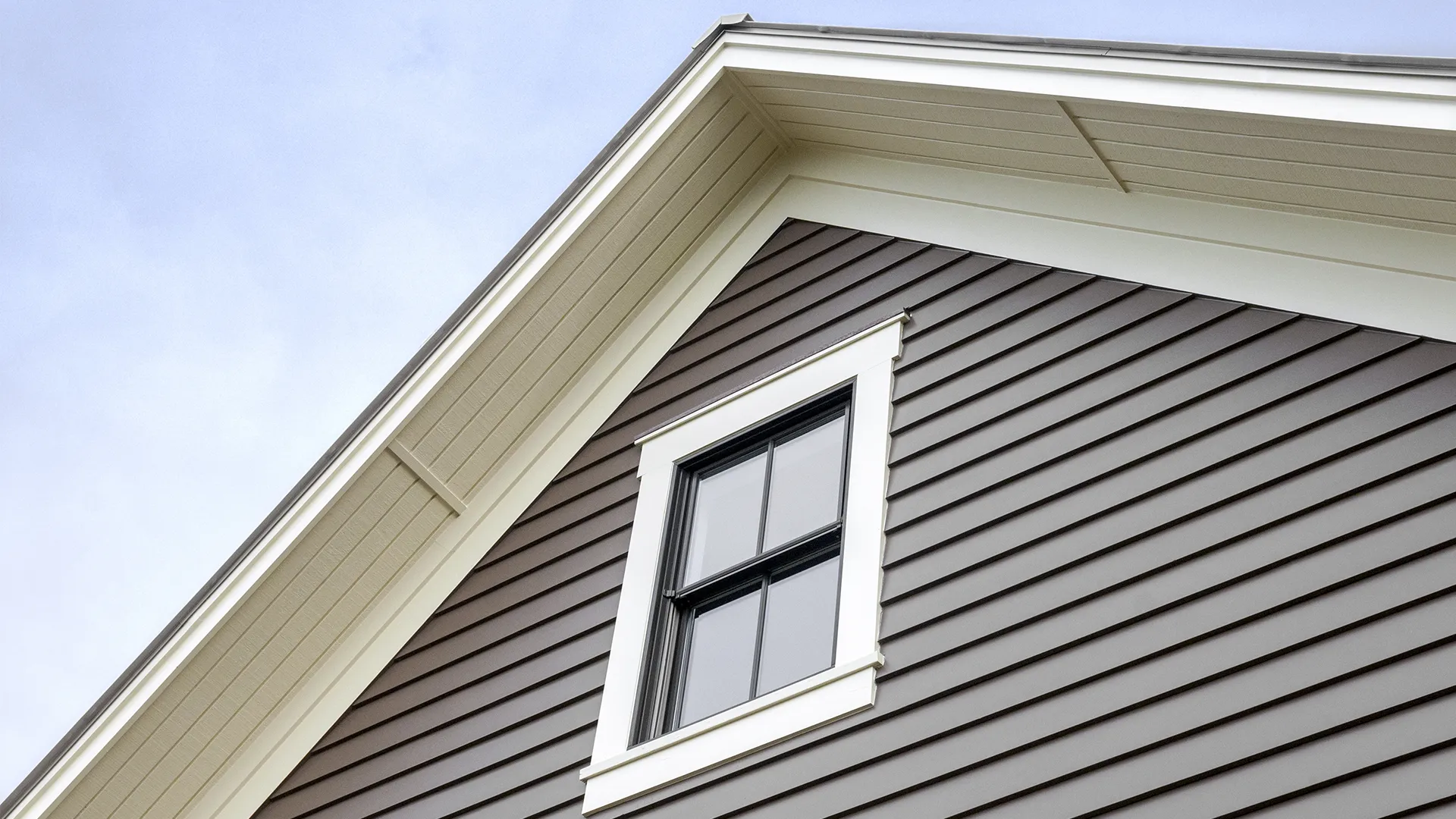
Vinyl siding had its heyday in New Jersey’s suburbs during the late 90s and early 2000s, and millions of homes in Bergen, Passaic, Essex, and Morris Counties had it installed. It was affordable, low-maintenance, and a big step up from painted wood. At the time, it made sense.
That was 20 or 30 years ago.
The vinyl that looked crisp in 1998 is showing its age now: faded color, brittle panels, seams that have shifted and gapped, paint that won’t adhere. A lot of homeowners are looking at their exterior and realizing it’s time, not just for a refresh, but for a real upgrade. And increasingly, that upgrade is James Hardie® fiber cement siding.
Here’s why the shift is happening, what you’re actually getting when you make the switch, and what to expect from the process.
The Vinyl Siding Replacement Wave is Real
This isn’t just a one-time observation. The siding industry is in the middle of a significant vinyl replacement cycle, driven by the simple math of age. The vinyl installed during the suburban building boom of the 1980s through early 2000s has reached or is approaching the end of its useful life. In northern New Jersey, where the weather cycles are demanding, that degradation timeline moves faster.
Vinyl siding was never meant to last 40 years. Most products carry warranties in the 25–30-year range, and real-world performance often falls shorter when you factor in UV exposure, freeze-thaw cycles, and the physical damage of NJ storms. When panels start to crack, buckle, or lose color integrity, replacement, not repair, is usually the right call.
What’s changed in this replacement cycle is where homeowners are landing. A decade ago, the default upgrade was better vinyl: thicker panels, more texture options, a step up from the product before. Today, a growing number of homeowners are making a different calculation. They’re looking at what a 30-year material actually looks like and choosing James Hardie®.
What Changes When You Switch from Vinyl to Fiber Cement
The most important thing to understand is that James Hardie® fiber cement isn’t a premium version of vinyl. It’s a different category of material entirely. The performance differences aren’t incremental. They’re structural.
Fire Resistance
Vinyl is combustible. When it burns, it melts, spreads flame, and can release hydrogen chloride and other harmful gases. In a neighborhood where homes sit 10 or 15 feet apart, which describes most of suburban Bergen and Passaic County, that matters.
James Hardie® fiber cement is manufactured from Portland cement, sand, and cellulose fiber. None of those materials burn. The material carries a Class A fire rating under ASTM E84, the same classification as brick and concrete. It won’t ignite from radiant heat or windborne embers, and it won’t become fuel in a fire scenario. That’s not a marketing claim; it’s a material property backed by independent testing and building code recognition.
Impact and Wind Performance
Fiber cement is harder and denser than vinyl. It resists hail, flying debris, and the physical stress of high-wind events in ways that vinyl simply can’t. Vinyl panels can flex, crack under impact, and blow off in storms. Properly installed James Hardie® siding maintains its integrity in conditions that would damage vinyl siding.
For homeowners in areas that see nor’easters, summer thunderstorms, and the occasional hailstorm, this isn’t a theoretical benefit. This is real peace of mind.
Moisture and Rot Resistance
One of the failure points driving vinyl replacement in northern NJ isn’t the vinyl itself; it’s what happens beneath it. Vinyl that has shifted, cracked, or lost its seal at the seams allows water to infiltrate. Over time, that moisture gets into the sheathing and framing, leading to rot and mold issues that go well beyond a cosmetic siding problem.
Cement doesn’t absorb water. James Hardie® products are engineered specifically for moisture resistance, including HardiePlank® lap siding’s resistance to the humidity cycles NJ weather delivers. When the siding is installed correctly with proper flashing, underlayment, and clearances, you eliminate the infiltration pathways that plagued aging vinyl.
Color Longevity
If you’ve watched your vinyl siding fade over 15 or 20 years, you know the frustration. UV exposure breaks down the pigment in vinyl, leading to a chalky, washed-out appearance that’s difficult to address. You can’t paint vinyl reliably — the surface doesn’t accept paint the way wood or fiber cement does, and even when it’s done well, the results don’t hold.
James Hardie® ColorPlus® Technology applies color at the factory under controlled conditions, baking it into the finish. The bond is fundamentally different from field-applied paint, and the UV resistance is significantly better. Your exterior looks the same year over year without the repainting cycle that wood siding demands.
The Resale Value Conversation
New Jersey’s real estate market has been competitive, and buyers are paying attention to exterior materials in ways they weren’t a decade ago. Aging vinyl siding signals deferred maintenance, a sign that the home hasn’t been kept up and a line item that shows up in inspection reports and buyer negotiations.
James Hardie® siding replacement, by contrast, is a visible, verifiable upgrade. It shows up in the listing, it photographs well, and buyers who have done their research understand what they’re looking at. Industry data consistently show fiber cement siding near the top of exterior remodeling projects for cost recoupment, routinely in the 70–80% return range nationally, and often higher in competitive NJ markets where buyers compare homes closely.
More practically: a fresh James Hardie installation tells buyers they won’t need to think about siding for 30 years. That’s a different conversation from explaining why the vinyl looks the way it does.
Questions to Ask Before You Commit
If you’re ready to install James Hardie® fiber cement siding, it’s crucial to verify a few key things about the contractor and the installation before you start. In order to get the most out of your siding replacement, you should ask questions like the ones below.
- Is the contractor a certified James Hardie® installer? This is required for the full 30-year warranty.
- What moisture barrier and flashing system are included? This is where contracts tend to cut corners to lower prices.
- Is ColorPlus® factory finish included, or will siding be painted on-site? Factory finish outperforms field-applied paint.
- Will the existing sheathing be inspected before installation? If the answer is vague, press harder.
- What does your workmanship warranty cover, and for how long?
The Bottom Line
The vinyl siding on many New Jersey homes has done its job. It served its purpose for 20 or 30 years. But it’s reaching the end of its life, and when it’s time to replace it, the case for James Hardie® fiber cement is strong.
Better fire resistance. Better impact performance. Better moisture protection. Color that lasts. A 30-year warranty. And a finished exterior that signals quality to every buyer who walks past.
If your vinyl is showing its age and you’re ready to have a real conversation about what comes next, CRS has been doing this work in northern New Jersey for nearly 50 years. We’re happy to come take a look and give you a straight assessment of your options.
Get in touch today.