Standing water on a flat commercial roof is not just a nuisance. It is a problem with a countdown.
Most building owners see ponding water after a heavy rain and assume it will dry out. Sometimes it does. But when water is still sitting on the roof 48 hours later, the roof is telling you something.
At CRS Companies, we often address ponding water before it turns into something more serious. The issue may start small, but if it keeps happening in the same place, it is usually a sign that your roof needs to be evaluated.
What Ponding Water Actually Means
Ponding water is water that remains on the roof for an extended period after rainfall. A common benchmark in commercial roofing is 48 hours. If the water is still sitting in the same area two days after the rain has stopped, it is worth having your roof evaluated.
However, that does not mean every puddle is an emergency. After a major storm, some temporary water on a flat roof can be expected. The concern is the water that keeps pooling in the same place, stays too long, or gradually builds up over time.
Commercial roofs are not supposed to hold standing water indefinitely. When they do, it is usually because of a larger issue.
Common causes include:
- Clogged drains or scuppers
- Debris blocking drainage paths
- Low spots caused by settling or deck movement
- Compressed or saturated insulation
- Improper slope from the original installation
- Previous repairs that disrupted water flow
None of these issues fix themselves. In fact, most of them get worse the longer water continues to sit in the same place.
What Standing Water Does Over Time
The first problem is weight.
Commercial roof systems are not designed to continuously support the weight of additional standing water in the same areas. A few inches of water across a section of your roof can add significant load and stress. Over time, that added weight can cause the roof to sag further, creating deeper low spots that trap even more water.
That is how a drainage issue becomes a cycle.
The second problem is deterioration. Roofing membranes are built to handle all different types of weather, but they are not meant to sit under standing water for weeks or months at a time. Ponding water accelerates wear. It stresses seams. It sits against flashing. It works around penetrations. It finds every weak point in the system.
Eventually, water gets where it should not be.
Once moisture gets beneath the membrane, the problem changes. Now you may be dealing with wet insulation, mold or odor concerns, and damage that is no longer visible from the surface. By the time water shows up inside the building, the roof has often been holding moisture for a long time.
You are not just fixing a leak at that point. You are dealing with everything the water infiltrated.
Why Waiting Costs Building Owners More
Ponding water is almost always less expensive to address early.
A drain that needs cleaning is solved by a maintenance call. A scupper that needs repair is manageable. A small drainage correction can often be planned and handled before it becomes disruptive.
But a membrane that has been sitting under a few inches of water for months at a time is a different conversation. At that point, the surface may be deteriorated, the insulation underneath may be compromised, and a simple patch may not be enough.
One of those situations may cost a few hundred dollars for minor drainage adjustments or debris removal. The other usually involves structural repairs, membrane replacement, or insulation damage that can cost thousands.
That is why ponding water should not be treated as something to “keep an eye on” indefinitely. Monitoring is useful, but only if it leads to action before the roof system starts to break down.
Why Patching Is Not Always the Answer
When there is an active leak, the natural instinct is to patch the area where water appears to be getting in. Sometimes that is the right move. If there is a puncture, an open seam, or a flashing issue, a targeted repair may solve the immediate problem.
But patching does not fix ponding water.
If water continues to collect in the same area, any repair in that spot is likely to fail again because the underlying drainage issue has not been addressed. This is why some commercial roof leaks keep returning. The repair may have fixed the immediate problem, but the conditions that caused it remain.
What The Commercial Roofer You Choose Should Do
When CRS evaluates ponding water on a commercial roof, we are not just looking at the puddle. We are looking at the roof system around it.
Where is the water supposed to go? Are the drains clear? Is the slope moving water properly? Are there signs of membrane deterioration? Are there soft spots? Is the insulation possibly saturated? Is the ponding isolated, or is it part of a larger drainage pattern across the roof?
The right solution depends on what is causing the problem. In some cases, maintenance may be enough. In others, the roof may need more involved work, such as correcting low areas, improving drainage paths, adding tapered insulation, replacing wet insulation, or restoring damaged sections of the membrane.
When to Take Ponding Water Seriously
If water is still sitting on your commercial roof 48 hours after rainfall, it is time to pay attention. If it is happening repeatedly in the same area, it is time to have the roof looked at.
Other warning signs include:
- Staining around ponding areas
- Soft spots underfoot
- Bubbling or blistering in the membrane
- Clogged or slow drains
- Interior ceiling stains
- Leaks that show up after heavy rain
Even without an active leak, these signs can indicate your roof system may be under stress.
The best time to address ponding water is before tenants call with complaints, before ceiling tiles are stained, and before the roof assembly has absorbed moisture. Once water gets inside the system, the repair is almost always more complicated.
Protect the Roof Before the Problem Spreads
Standing water is one of the clearest signs that a commercial roof needs attention. It may be a simple maintenance issue, a drainage design issue, or a sign that the roof is aging and needs a larger plan.
What it should not be is ignored.
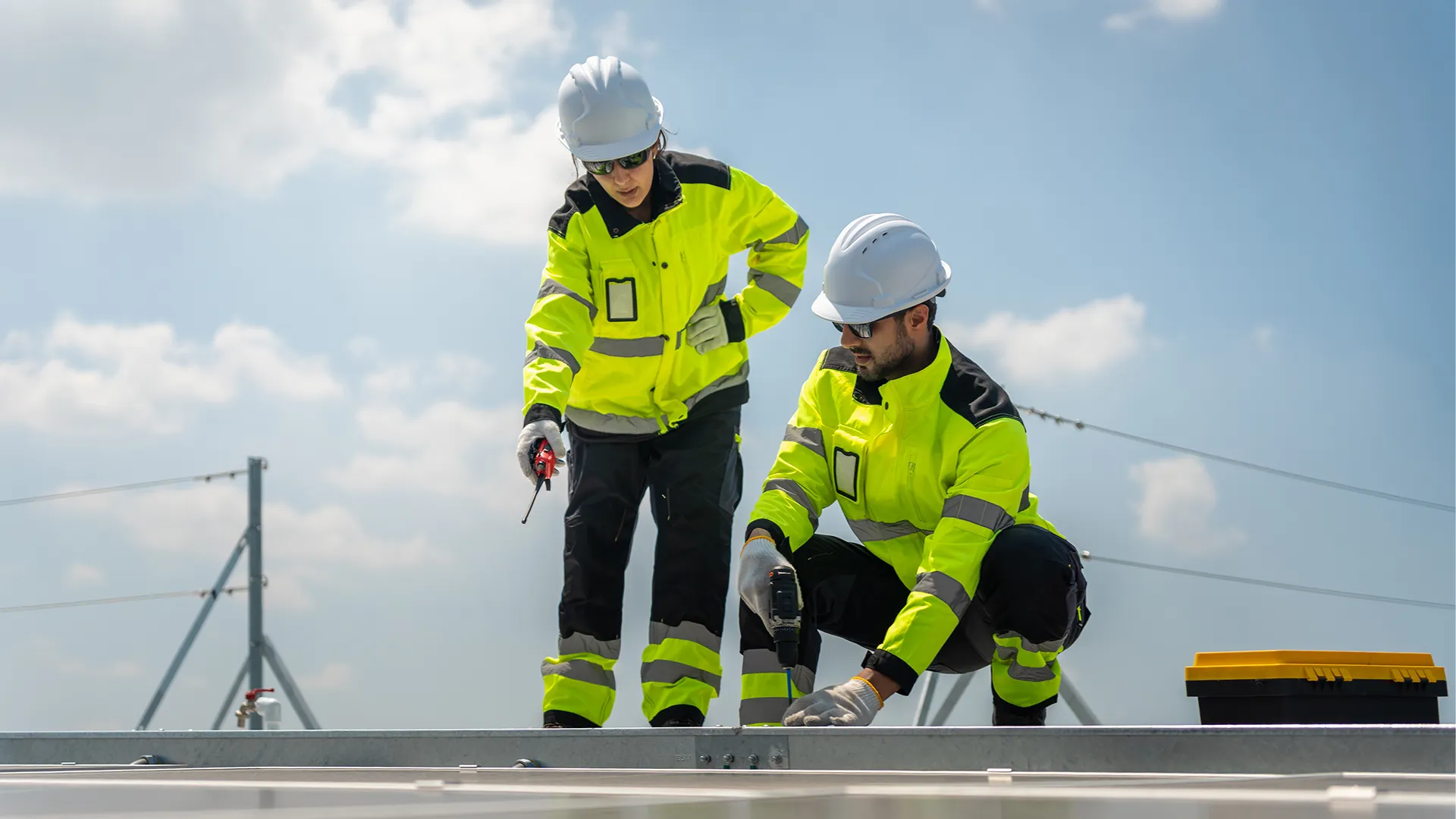
At CRS Companies, we help commercial property owners and managers identify ponding water problems, evaluate roof condition, and determine the right next step.
If water is sitting on your commercial roof long after the storm has passed, do not wait until it becomes something more serious. Contact CRS today to schedule a commercial roof inspection and get a clear assessment of what your roof needs.