Every summer, homeowners across New Jersey call their HVAC company because their house won’t cool down. The technician comes out, checks the system, and tells them everything looks fine. The bill arrives. The house is still hot.
The system is fine. But the attic isn’t.
After nearly 50 years of working on roofs and attics across northern New Jersey, we can tell you with confidence: an uncomfortable, expensive-to-cool home is frequently an attic problem. Specifically, it’s an insulation and ventilation problem. And it’s one of the most cost-effective things you can fix.
Here’s what’s actually going on and what to do about it.
What Your Attic Does on a Hot Day
On a 90°F summer day, an attic with poor ventilation can reach 150°F or more. We’ve seen it. That heat doesn’t stay up there either. It radiates down through your ceiling into your living space, and your air conditioner runs constantly trying to compensate. The AC isn’t broken. It’s just fighting a battle it can’t win.
That sustained heat also does real damage to your roof. Shingles that bake from above and below deteriorate faster. Roof decking dries out and becomes brittle. The structural components of your roof take on unnecessary thermal stress year after year. A poorly ventilated attic doesn’t just hurt your energy bill, it actively shortens the life of your roof.
The Fix: Insulation and Ventilation, Working Together
This is where we need to be direct, because there’s a lot of confusion on this topic: insulation and ventilation are not the same thing, and one cannot substitute for the other. They solve different parts of the problem, and both need to be right.
Insulation Slows Heat Transfer
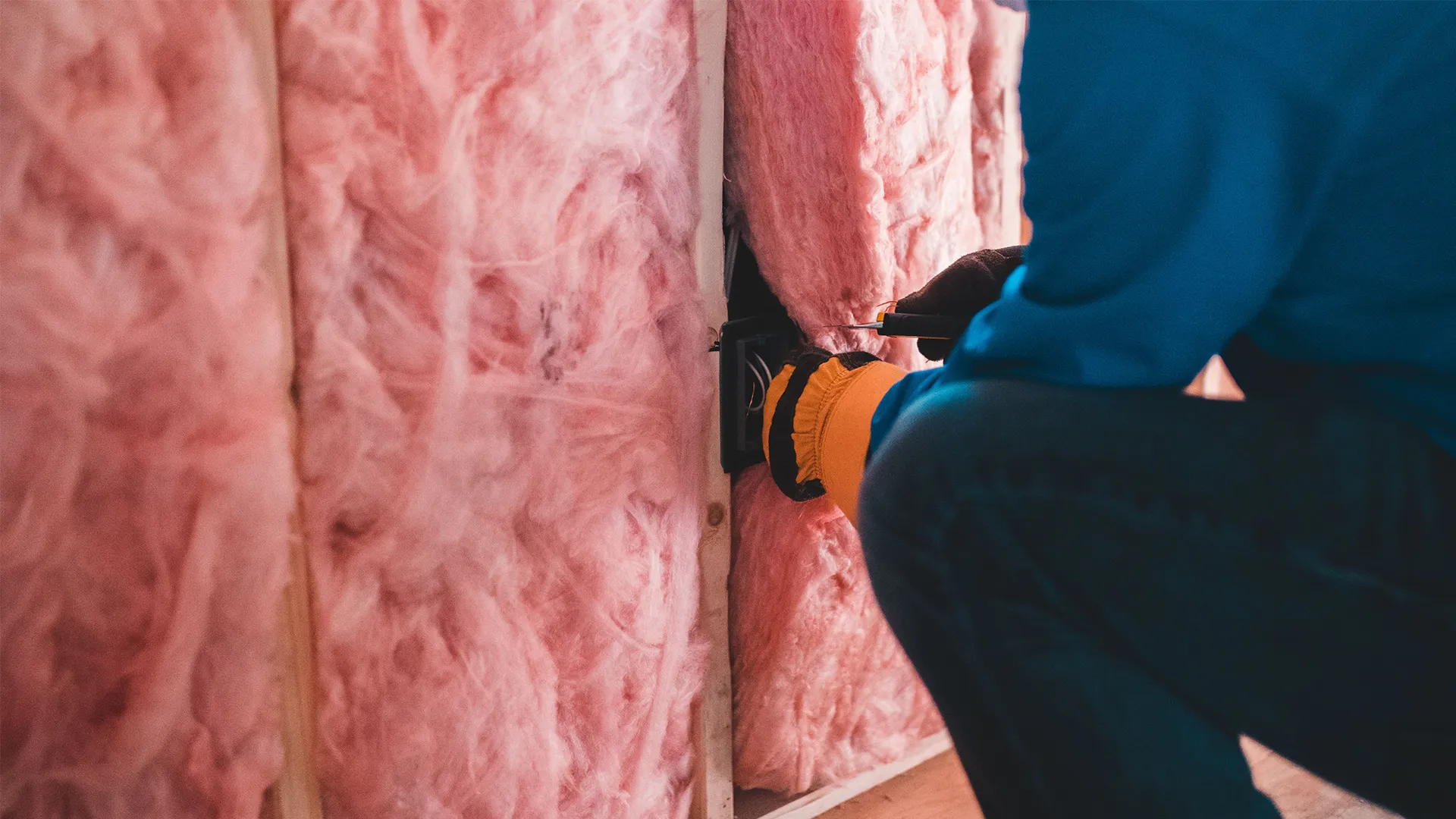
Insulation sits on your attic floor and resists heat moving from the hot attic space down through your ceiling into your living space. The better your insulation, the slower that transfer happens, and the less your cooling system has to work.
Insulation effectiveness is measured in R-value. For a New Jersey home, the Department of Energy recommends R-49 to R-60 in the attic. Most older homes we work in have R-11 to R-19, a fraction of what’s needed. At those levels, your ceiling is barely slowing the heat down.
A few things we routinely find that make insulation perform even worse than its rating suggests:
- Compressed insulation: insulation that’s been walked on or had things stacked on it loses significant R-value
- Wet or moisture-damaged insulation: absorbs water and loses nearly all thermal resistance; must be replaced, not dried out
- Insulation blocking soffit vents: an extremely common problem that kills ventilation airflow and must be corrected before adding more insulation
If your insulation is old, thin, or damaged, adding more on top of it is not always the right answer. We assess the existing material first, every time.
Ventilation Removes the Heat
While insulation slows heat from entering your living space, ventilation’s job is to remove the heat building up in the attic before it becomes a problem. A properly ventilated attic pulls cooler outside air in through soffit vents at the eaves, allows it to rise through the attic space, and exhausts it out through ridge vents or high exhaust vents at the peak of the roof.
When this works correctly, attic temperatures stay much closer to outdoor temperatures, a manageable condition. When it doesn’t work, the attic becomes a sealed oven.
The standard is one square foot of net free ventilation area per 150 square feet of attic floor space, split roughly equally between intake at the soffits and exhaust at the ridge. That balance matters. A roof with plenty of exhaust vents but blocked soffits doesn’t ventilate. It just has a lot of hardware that isn’t doing its job.
The most common ventilation problems we find:
- Soffit vents blocked by insulation or sealed during re-siding projects
- Ridge vents installed without adequate soffit intake to balance them
- Bathroom exhaust fans venting into the attic instead of to the exterior
- Undersized or incorrectly placed exhaust vents for the attic square footage
- A mix of vent types that creates short-circuiting rather than true through-flow
Any one of these issues can undermine an otherwise adequate system, but all of them are correctable.
Why You Need Both Insulation and Ventilation
We occasionally hear from homeowners who added insulation and didn’t see the results they expected, or who had vents installed and still have a hot house. Nine times out of ten, the reason is that only half the problem was addressed.
Good insulation in a poorly ventilated attic means the attic still overheats, the insulation just slows how fast that heat reaches you. It helps, but not as much as it should.
Good ventilation with inadequate insulation means the attic temperature is more reasonable, but heat still moves through your thin ceiling into the living space below. Your AC still runs hard. Your top floor is still uncomfortable.
When both systems are properly sized and installed, the results are significant and immediate. The attic stays cooler. The ceiling stays cooler. Your AC runs less. Your energy bills drop. Your top floor becomes livable again.
Signs Your Attic Isn’t Performing
You don’t need to go up there to know something is wrong. These are the signs we hear about most:
- Top-floor rooms that never reach the set temperature, regardless of how long the AC runs
- An air conditioner that runs almost continuously on hot days
- Energy bills that seem high relative to your home’s size and your usage
- Ice dams forming along your eaves in winter, a reliable indicator of attic heat escaping through an under-insulated floor
- Shingles that are aging faster than expected, or granule loss that seems premature for the roof’s age
If you’re checking two or more of these boxes, an attic assessment is due.
What We Look At
When we assess an attic for insulation and ventilation, we’re evaluating the full system: existing insulation depth, type, and condition; whether a vapor barrier is in place and intact; the number, placement, and condition of intake and exhaust vents; whether exhaust fans are properly ducted to the exterior; and any existing signs of moisture damage that need to be corrected before new work goes in.
We don’t add insulation over wet or damaged material. We don’t install exhaust venting without confirming there’s adequate intake to balance it. And we don’t recommend work your attic doesn’t need.
What we find is what we tell you. That’s been our approach since 1977.
The Short Version
Your HVAC system can only work with the conditions your home gives it. If your attic is trapping heat and transferring it into your living space, your air conditioner will run harder, cost more to operate, and wear out sooner, no matter how efficient the equipment is.
Proper attic insulation and ventilation are not just any upgrade. It’s a basic performance requirement for a home to function as it should. Get it right, and everything else works better.
If you’d like us to take a look at your attic before summer heat sets in, give us a call. We’ll tell you what we see and what, if anything, needs to be done.